
|
|||
|
|
|||
 |
|||
| WESTERN LARCH (Tamarack)- CLICK ON PICTURES FOR LARGER VIEW OF IMAGE |
|||
|
|||
|
Size at 150 years: 100-160 feet tall, 1 1/2 to 3 feet in diameter Life Span: 500+ years Needles: Crowded deciduous in a cluster of 14-30, 1/2" long on spur twigs. Turn brilliant gold in the fall, then drop to the ground. Cones: 1 to 1 1/2" long with bract protruding from each cone scale. Bark: Reddish-brown. Flat plates on mature trees. Native Americans, it is said, seldom used western larch wood; however, they mixed the dried pitch with grease and used it as a cosmetic. Dried powdered pitch was also an ingredient of a red paint applied to wood or buckskin. |
|||
|
|
|||
| WESTERN RED CEDAR- CLICK ON PICTURES FOR LARGER VIEW OF IMAGE |



|
|
|

|
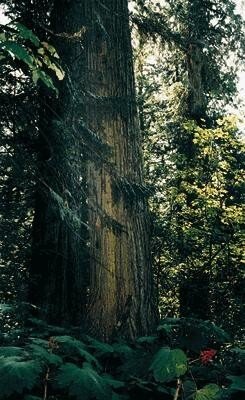
Size at 250 years: 100-160 feet tall, 2-8 feet in diameter Life Span: 1,000+ years Leaves: Small, overlapping, scale-like leaves that form sprays, in opposite patern. shiny-dark green in color. 1/16 to 1/8" long. Cones: 3/4" long. Brown. Bark: Cinnamon-red on young stems, gray on old trunks. Fibrous and shredding. The western red cedar has been called "the cornerstone of Northwest Coast aboriginal culture," and has great spiritual significance. Coastal people used all parts of the tree. They used the wood for dugout canoes, house planks, bentwood boxes, clothing, and many tools such as arrow shafts, masks, and paddles. The inner bark made rope, clothing, and baskets. The long arching branches were twisted into rope and baskets. It was also used for many medicines. |
|||
|
|
|||
| WESTERN WHITE PINE- CLICK ON PICTURES FOR LARGER VIEW OF IMAGE |
|||
|
|||
|
Size at 150 years: 120-180 feet tall, 2.5 to 3.5 feet in diameter Life Span: 350 years Needles: 2-4" long, in bundles of 5 Cones: 6-12" long, curved when dry The Thompson people made a medicine from the boughs of western white pine. |
|||
|
|||
| WHITEBARK PINE- CLICK ON PICTURES FOR LARGER VIEW OF IMAGE |
|||
|
|||
|
Size at 250 years: 30-60 feet tall, 1-2 feet in diameter Life Span: 450 years Needles: 1 1/2 to 2 3/4 inches long, in bundles of 5. Clustered toward the ends of the branches. Cones: About 2 1/2" long, eggshaped, purplish-brown Bark: Young trees are light brownish gray to cream white, becoming dark brown at maturity The seeds of the whitebark pine are a favorite food of the grizzly bear. A bird called the Clarks Nutcracker also eats the seeds & is responsible for "planting" many of the seeds, since the cone will not open naturally until it decays. The Thompson people ate the seeds of the whitebark pine (pinenuts) both raw and roasted. They collected the cones in the fall and dried them to open the scales. They extracted the seeds and ate them fresh or sometimes preserved them for winter by cooking and crushing them and then mixing them with dried berries. |
|||
|
|||
| QUAKING ASPEN- CLICK ON PICTURES FOR LARGER VIEW OF IMAGE |
|||
|
|||
|
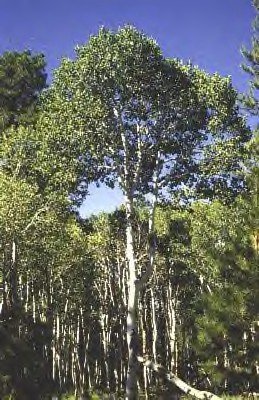
Size at 100 years: 50-60 feet tall, 1-1 1/2 feet in diameter Life Span: 120 years Leaves: 1 1/2-3" in diameter, broadly egg-shaped, edge finely sawtoothed. Upper surface shiny green, dull green beneath turns brilliant gold in fall. Fruit: About 1/4" long, narrowly conical, curved Bark: Smooth, whitish and thin to cream-colored becoming dark brown or gray with age. Indian legend tells us when the Great Bear smelled the hunter's fire in fall, the ensuring fight splattered yellow cooking grease and red blood on the leaves of the aspen forest. The quaking aspen and its trembling leaves are still a source of wonder. The key to their fall hues lies not in myth, but in the natural environment. The color changes start first in the sub-alpine zone (9,000-11,000 feet elevation) in early September. Progressively, changes reach the mountain zone (8,000-95,000 feet) by mid-month. Weather can dictate a good or poor year for color, and the fall display can last from days to weeks. Aspen wood is soft and brittle and not very durable. The Shuswap people used young aspen to make tent poles, but these apparently rotted after a couple of years. Rotten wood had its uses though. The Carrier people lined babies' cradles with it because it was soft and absorbent. Aspen branches boiled in water made a cleanser for guns, traps, and buckskins. Hunters would also wash themselves in this solution to remove human odour. The Okanagan people predicted storms when aspen leaves quivered in no perceptible wind. |
|||
|
|||
| WESTERN PAPER BIRCH- CLICK ON PICTURES FOR LARGER VIEW OF IMAGE |
|||
|
|||
|
Size at 60 years: 50-70 feet tall, 1-2 feet in diameter Life Span: 80+ years Leaves: 2-3" long, egg-shaped, edges coarsely notched, surface dull, dark green. Fruit: Cylindrical, stalked strobile, 1-1 1/2" long. Bark: Dark brown at first, turning chalky to creamy white. Separates into thin papery strips. Paper birch can be an important winter food for many forest animals including deer and moose. It is also a favourite food of snowshoe hare, porcupine, and beaver. Many birds will nest in paper birch, including woodpeckers, sapsuckers, and vireos. Many Native Americans used birch bark as material for baskets, cradles, and canoes. They also used it for wrapping and storing food and for roofing pit houses. They used the wood for many small items, including bows and spoons, baskets, cradles, canoes, wrapping and storing food, roofing pit houses, snow goggles, moose calls, toboggans; wood: dishes. They drank the sap as a medicine for colds. Birch sap can be used to make syrup, but it requires 80 to 100 litres of sap to make one litre of syrup! Undiluted, birch sap can be used to make vinegar or birch beer.
|
|||
|
|
|||

|
|||
|
|||
|
|||
|
|||
|
|




|
|
|
|
|||
|
|
|||||
|
|||||
|
This Site Designed and Maintained By- Created October 23, 2002 Website Hosted by |
|||||


